 The
Four Point Insurance Inspection was created after
Hurricane Andrew struck Florida in 1992. It is
performed on behalf of the insurance companies and,
typically, as a requirement for the insurer offering
insurance to the new homeowner. After last year's
barrage of hurricanes in Florida, the Four Point
Insurance Inspection has taken on added importance.
As insurance companies are beginning to see the
benefit of the inspection, the program is spreading
to other areas of the country. The benefit to the
insurance company is, obviously, reduced loss risk
on homeowner's insurance policies. This is an area
of business that has, for many years, been a money
loser for insurance companies. The
Four Point Insurance Inspection was created after
Hurricane Andrew struck Florida in 1992. It is
performed on behalf of the insurance companies and,
typically, as a requirement for the insurer offering
insurance to the new homeowner. After last year's
barrage of hurricanes in Florida, the Four Point
Insurance Inspection has taken on added importance.
As insurance companies are beginning to see the
benefit of the inspection, the program is spreading
to other areas of the country. The benefit to the
insurance company is, obviously, reduced loss risk
on homeowner's insurance policies. This is an area
of business that has, for many years, been a money
loser for insurance companies.
In 2002, the Florida Legislature passed a law that
combined the Florida Residential Property and
Casualty Joint Underwriting Association (FRPCJUA)
and the Florida Windstorm Underwriting Association (FWUA).
This resulted in the creation of Citizens Property
insurance Corporation (Citizens), which more
efficiently and effectively provides insurance to,
and serves the needs of, homeowners in high-risk
areas and others who cannot find coverage in the
open, private insurance market. It is funded by
premiums paid by the insured and from other
insurance companies paying into the program to
reduce their overall losses.
The Four Point
Inspection consists of the following four
systems:
* Roof inspection
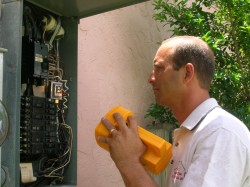
* Electrical Inspection
* HVAC (Heat, Ventilation & Air Conditioning
* Plumbing
The insurance
companies are looking for the four systems to be in
generally good working condition and fulfilling
their intended function. If the home is an older
home the insurance companies want to see that the
systems have been updated. In most cases, the forms
are provided by the insurance companies to their
clients. The clients then ask the inspector to fill
the form out during the course of the home
inspection. |